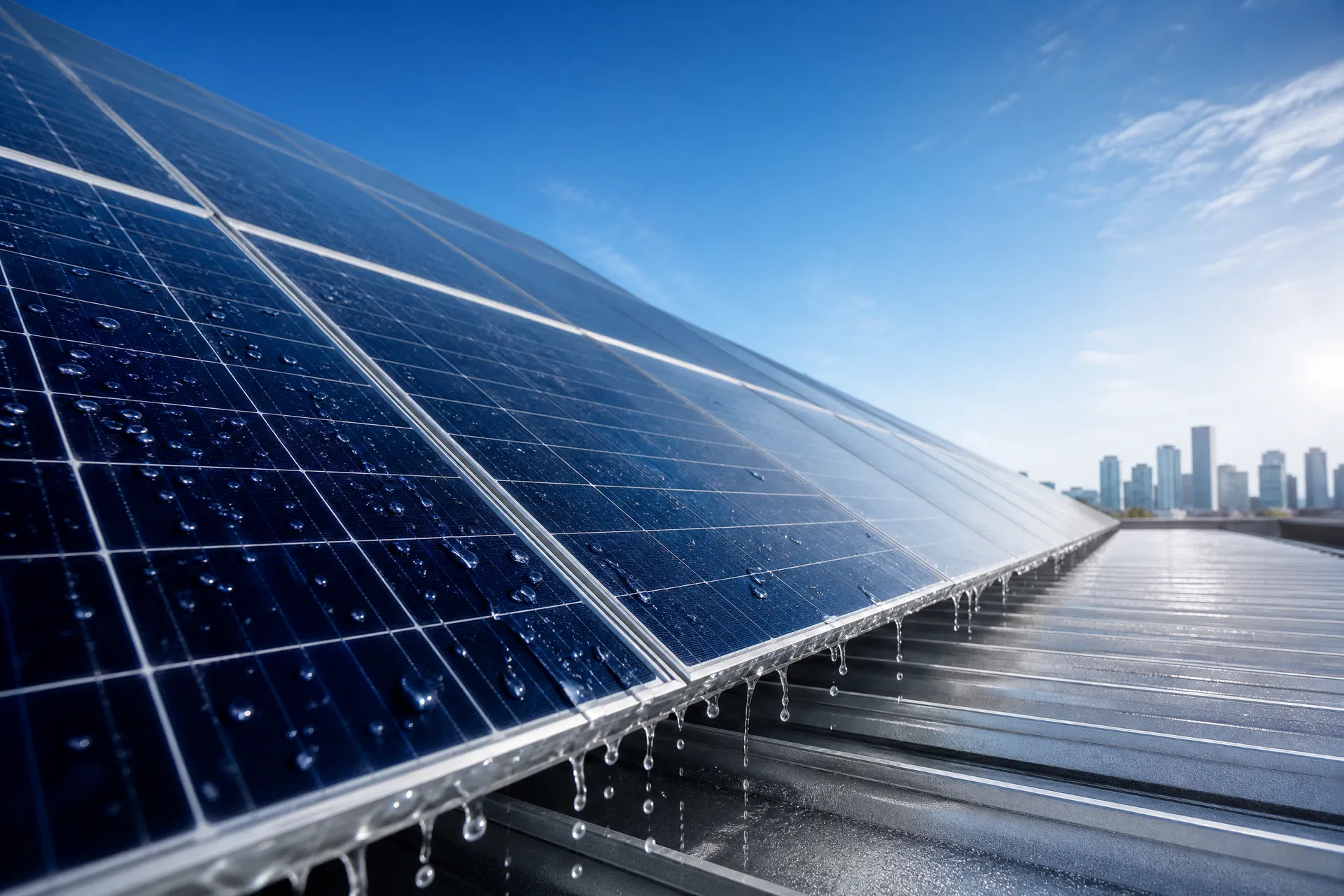
Solar panels use photovoltaic cells to convert sunlight into electricity, operating without noise or pollution. However, accumulated dust and dirt create a physical barrier that blocks sunlight from reaching the cells and reduces power output. Nano coating is a technology that can transform solar efficiency.
The Challenge of Maintaining Efficiency
Dust and dirt accumulating on panel surfaces block sunlight and reduce power output. Cleaning large-scale solar farms takes considerable time and effort, and is even more difficult in water-scarce areas. Cleanliness is directly related to power generation efficiency, and regular cleaning affects the return on investment.
How Nano Coating Makes a Difference
- Enhanced durability and efficiency: Resists scratches and wear, extending service life.
- Easy to clean: Repels water and oil, making water and oily substances less likely to stick and reducing maintenance frequency.
- Withstands harsh weather: UV-resistant, tolerates extreme temperatures and acids and alkalis, and helps with de-icing.
- Highly compatible: Suitable for crystalline silicon and thin-film technologies; can be applied during production or after installation.
- Sustainability compliance: Complies with REACH regulations.
Conclusion
Nano coating can help improve the efficiency and lifespan of solar energy systems. Its water- and oil-repellent properties, combined with resistance to environmental stress, can reduce cleaning frequency and maintenance costs, making it an important step toward sustainable energy.
Explore Installation Services by Need
Confirm eligibility, pre-treatment requirements, and pricing, then arrange an on-site assessment.
Official Product Videos
The videos below are provided by Nasiol’s official channel and show the actual effects of nano coatings on different surfaces.