
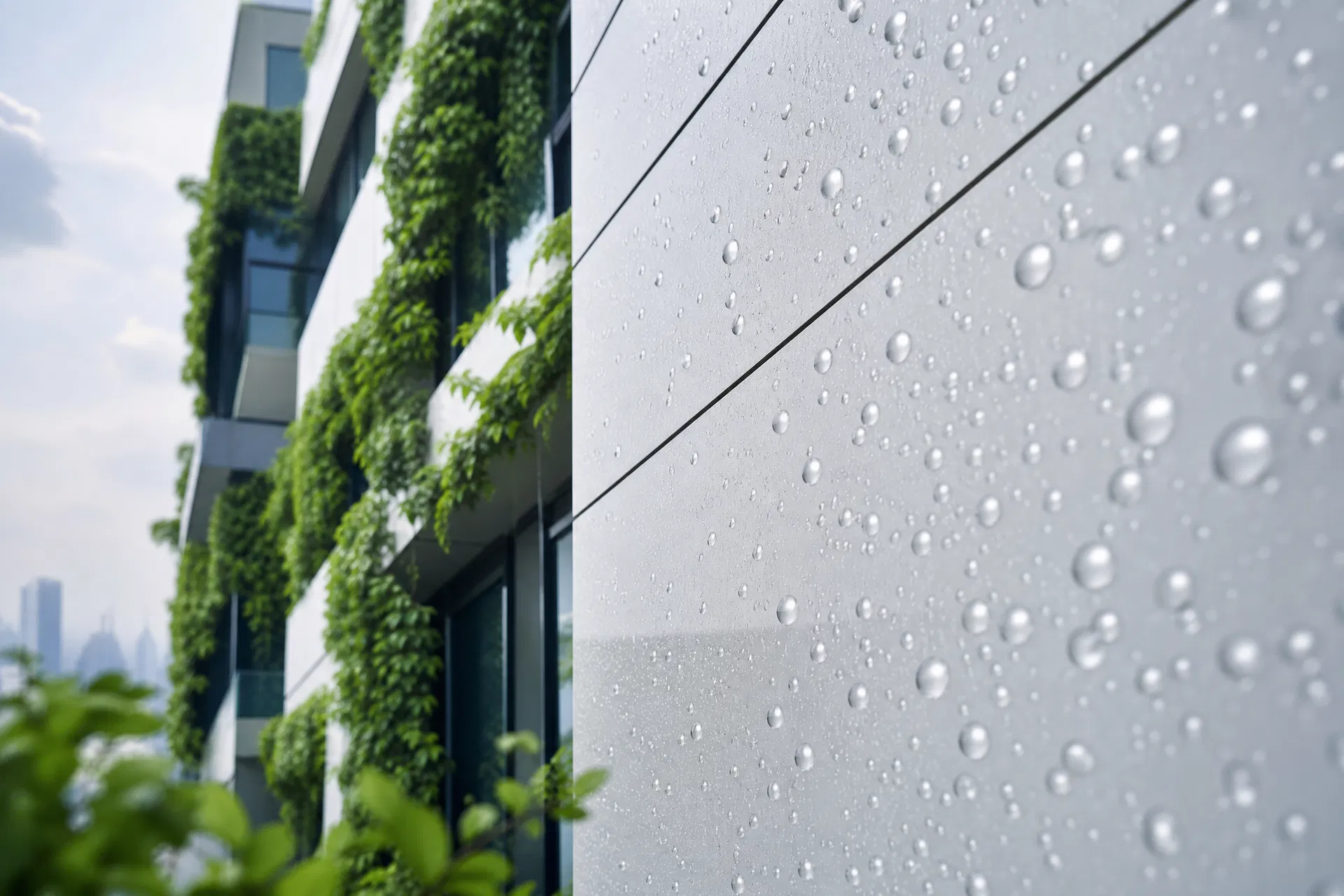
Nano coatings are made from materials precisely engineered at the molecular or atomic level, primarily to protect the outer layer or enhance surface performance. They bond to the substrate through strong chemical bonds such as covalent bonds, making them stronger, more durable, and longer-lasting than wax, oil, or sealants.
Key Benefits
Precisely engineered with aerogel, silicon dioxide, titanium dioxide nanoparticles, and graphene to form an ultra-thin, highly durable, nearly invisible yet effective protective layer.
- Corrosion-resistant, water-repellent, oil-repellent, scratch-resistant, easy to clean
- Anti-graffiti, mold resistance, stain resistance, UV resistance
- Chemical protection, antibacterial and antiviral properties
How to Reduce the Ecological Footprint
- Easy-clean performance allows contaminants to bead up and slide off, greatly reducing the need for harsh cleaning chemicals and water.
- Reduces dust and dirt buildup on solar panels, helping maintain power generation efficiency and lowering the environmental impact of cleaning.
- Anti-mold and anti-graffiti coatings reduce reliance on harsh chemicals and frequent maintenance, extending the life of structures.
- UV-protection and scratch-resistant coatings preserve an item's original appearance, extending its life and reducing waste and energy consumption.
- Cures quickly at room temperature, with no additional heating equipment or energy required.
Balancing Economy and the Environment
Nano coatings can protect the environment while also reducing long-term costs and improving efficiency and reliability. As the world shifts toward sustainable solutions, low-VOC products are becoming increasingly important. The manufacturer's advanced nano technology helps keep surfaces in their original condition while effectively repelling water, oil, dirt, and UV rays.
Official Product Videos
The videos below are provided by Nasiol’s official channel and show the actual effects of nano coatings on different surfaces.