
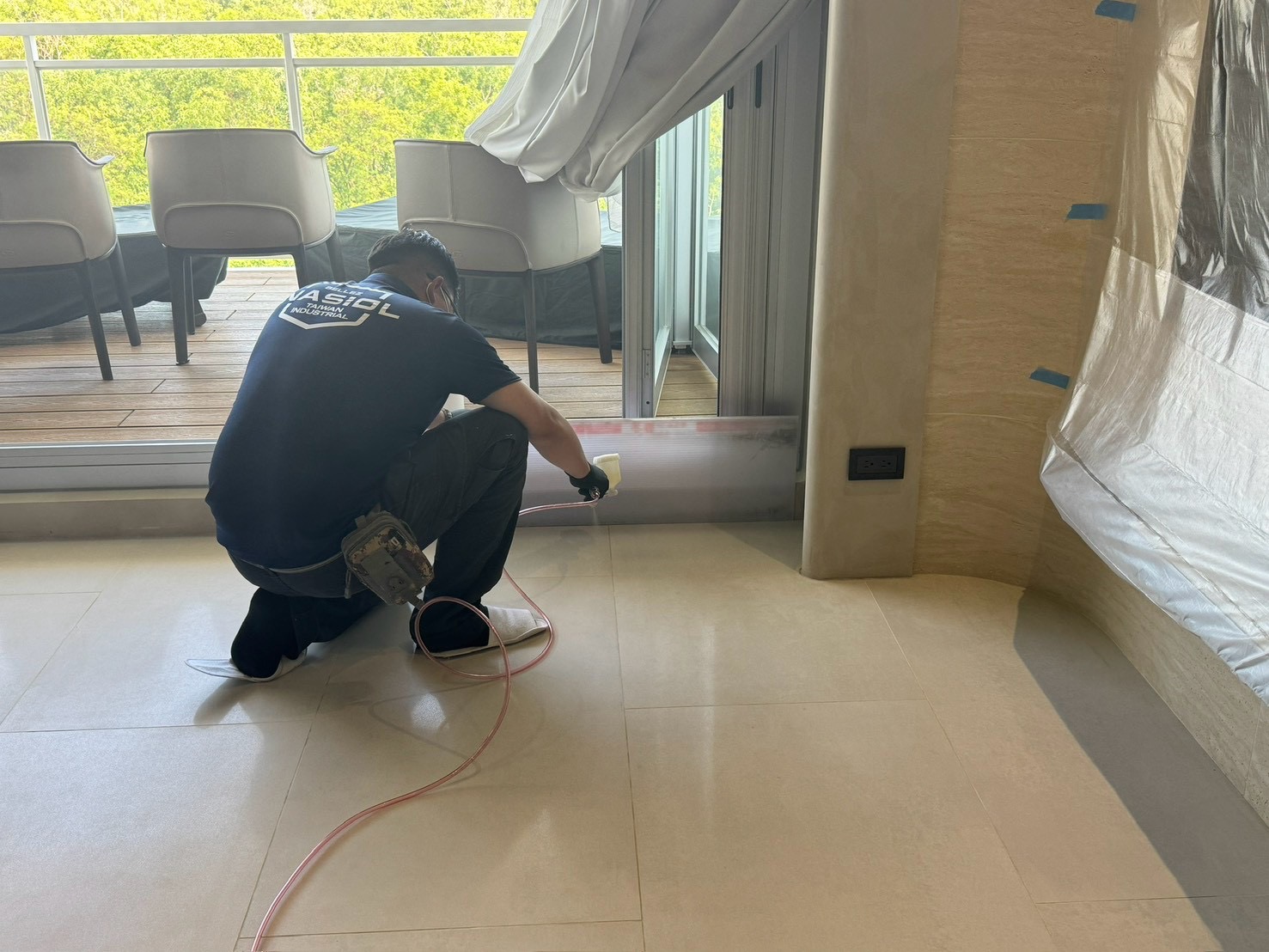
The yacht marina residence uses rough, non-slip floor tiles. When wiped with a cloth during daily use, the rough surface can snag the fibers, making cleaning more difficult, while fine textures can easily trap dirt. The owner therefore commissioned a transparent nano coating for the floor, hoping to make the tiles easier to wipe and maintain while preserving their original appearance.
Client Requirements
- The rough, non-slip texture can snag cloth fibers during wiping, creating more resistance when cleaning.
- Dust and everyday dirt can easily settle into the fine tile textures, making cleaning more time-consuming.
- The owner wanted to preserve the tiles’ original color and the space’s aesthetic while reducing the burden of everyday cleaning.
Installation Plan
Before installation, furniture, walls, and fixed equipment are fully covered. The tile surface is then cleaned, dried, and inspected. Finally, a transparent nano coating is evenly applied to the floor, forming a clear protective layer that is difficult to notice with the naked eye. This helps keep dirt from penetrating the fine textures and reduces resistance when wiping the rough surface.
Completed Work
Assessment and Maintenance for Similar Projects
For rough floor tiles, first check for existing dirt, adhesive residue, and protectants, and discuss furniture protection, drying conditions, and the work route. Clean after completion according to the handover instructions. Slip resistance in wet-area flooring still requires separate assessment; easier cleaning should not be taken to mean improved slip resistance.
This page documents an individual project. Actual results vary depending on the material, existing condition, use environment, and maintenance. For a new project, separately confirm the eligible scope of work, curing and time before resuming use, acceptance criteria, and written warranty.
View the Installation Assessment and Warranty Confirmation Process →